Home › Industrial and Heavy-Duty Asphalt Paving
Handle heavy loads with confidence using industrial asphalt paving in Arlington, TX. We design thick, reinforced pavement sections for truck yards, loading docks, and warehouse lots. Our team evaluates soil conditions, traffic types, and turning patterns to build pavement that resists rutting and fatigue. Protect your operations with asphalt engineered for demanding industrial use.
Precision Asphalt Arlington provides professional industrial asphalt paving throughout Arlington, TX, Texas and the surrounding area. Our licensed, insured crew delivers safe, clean, on-time work with a free estimate before anything begins. Call (817) 646-5980 or request your free quote.
Industrial Asphalt Paving for Demanding Arlington Sites
Heavy trucks, forklifts, and around-the-clock operations put very different stress on asphalt than passenger cars do. Industrial asphalt paving has to be designed and built for that reality from the start, especially in an active industrial city like Arlington.
Precision Asphalt Arlington focuses on pavements that hold up under repeated loading from semis, container haulers, waste trucks, and yard equipment. We work with distribution centers off I-20, manufacturing facilities near the GM plant, contractors with laydown yards, and large retail centers with loading docks. Each site gets its own pavement design based on traffic counts, wheel loads, subgrade strength, and drainage.
Instead of a one-size-fits-all approach, we look at what actually happens on your property. Where do trucks queue, turn sharply, or back into docks. Where does water collect after a storm. How often does heavy equipment move across the same path. Those details change how thick the asphalt needs to be, how strong the base must be, and which mix is appropriate. Our goal is to deliver a surface that performs for years instead of one that looks fine on day one and fails under your first peak season.
Site Evaluation and Pavement Design for Heavy Loads
The first step in industrial asphalt paving is understanding the ground and loads. When Precision Asphalt Arlington visits your site, we start with a detailed walk-through. We identify soil type, existing base conditions, drainage paths, and any signs of previous failure like rutting, alligator cracking, or pumping at joints.
For new construction, we may recommend geotechnical testing if soil conditions are unknown or if you expect very heavy, repetitive loads. Clay soils are common in Arlington, and they expand and contract with moisture. For heavy-duty pavements, we often stabilize the subgrade with lime or cement to reduce movement and improve support.
From there, we design the pavement structure: subgrade preparation, base material and thickness, and asphalt layers. A typical heavy truck route or loading area might use 8 to 12 inches of compacted crushed limestone base with 3 to 5 inches of hot mix asphalt in multiple lifts. The exact thickness depends on the volume and weight of traffic and whether the area will ever see stationary loads such as loaded trailers parked for days.
We also plan drainage into the design. Heavy-duty pavements fail quickly if water gets trapped under or within the structure. That is why we use specific slopes, surface drainage paths, and in some cases underdrains or French drains along edges where water tends to collect. These planning choices before the first load of asphalt arrives are what separate durable industrial work from basic parking lot paving.
Materials and Mixes Built for Forklifts, Semis, and Yard Equipment
Industrial asphalt paving is not just thicker, it uses different materials and mixes tailored to your operations. Precision Asphalt Arlington works with local Texas asphalt plants to specify mixes that perform well under high loads and high temperatures.
We typically use dense-graded hot mix asphalt with higher-quality aggregates and appropriate binder content for heavy-duty areas. For dock approaches, forklift lanes, and tight turning areas, we may choose a mix with more angular aggregate that resists shearing and rutting. In some cases, we recommend a stiffer binder grade that stands up better to Arlington's summer heat, when soft asphalt can deform under slow-moving or parked heavy vehicles.
On industrial sites, we also pay close attention to base materials. For heavy-duty surfaces we usually call for a thick layer of TxDOT grade crushed limestone flex base or similar high-quality material compacted to specified densities. In pavement designs with poor native soils, we may add geotextile fabric between subgrade and base to separate materials and improve long-term performance.
You will also have choices in surface texture and finish. For high-speed internal roads, we aim for smooth rides with proper transitions to concrete aprons. For forklift zones or slopes, we may leave a slightly more textured finish to improve traction, especially when dust, oils, or moisture are present. We explain the pros and cons of each option in plain language before you decide.
Construction Process: From Groundwork to Final Roll
Once the design is set, the quality of the construction process determines how long your industrial pavement will last. Precision Asphalt Arlington follows a step-by-step approach that focuses on compaction, joint quality, and drainage details.
We start by stripping failed asphalt or unsuitable soil and shaping the subgrade to final contours. If stabilization is required, we blend lime or cement into the soil, then moisture condition and compact it with heavy rollers. This stage is critical; a weak or uneven subgrade will telegraph problems into the asphalt no matter how good the surface looks.
Next we place and compact the base material in lifts, usually 4 inches at a time, checking thickness and density. For industrial projects, we frequently use nuclear density gauges or proof rolling with fully loaded trucks to confirm that the base can handle real-world loads.
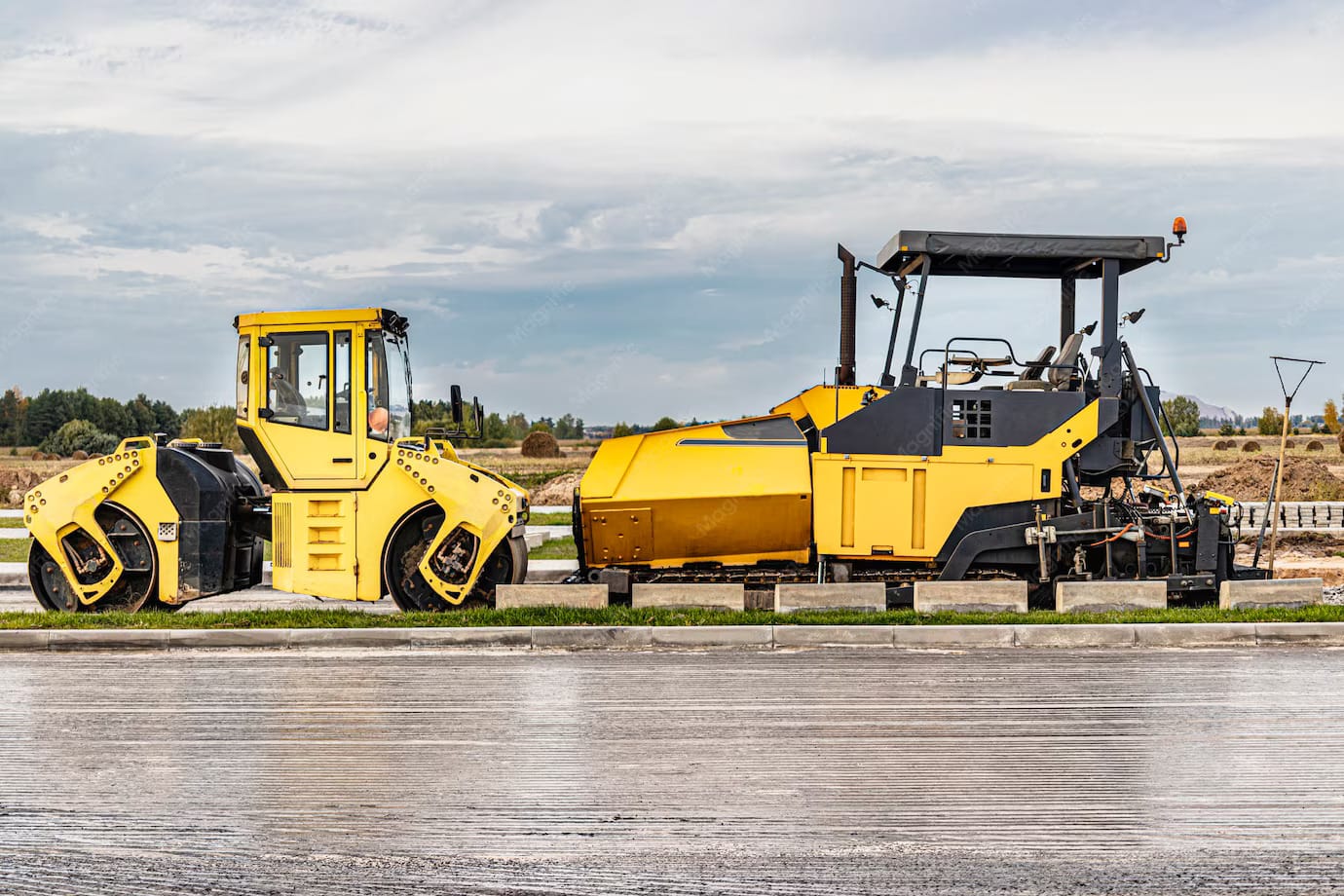
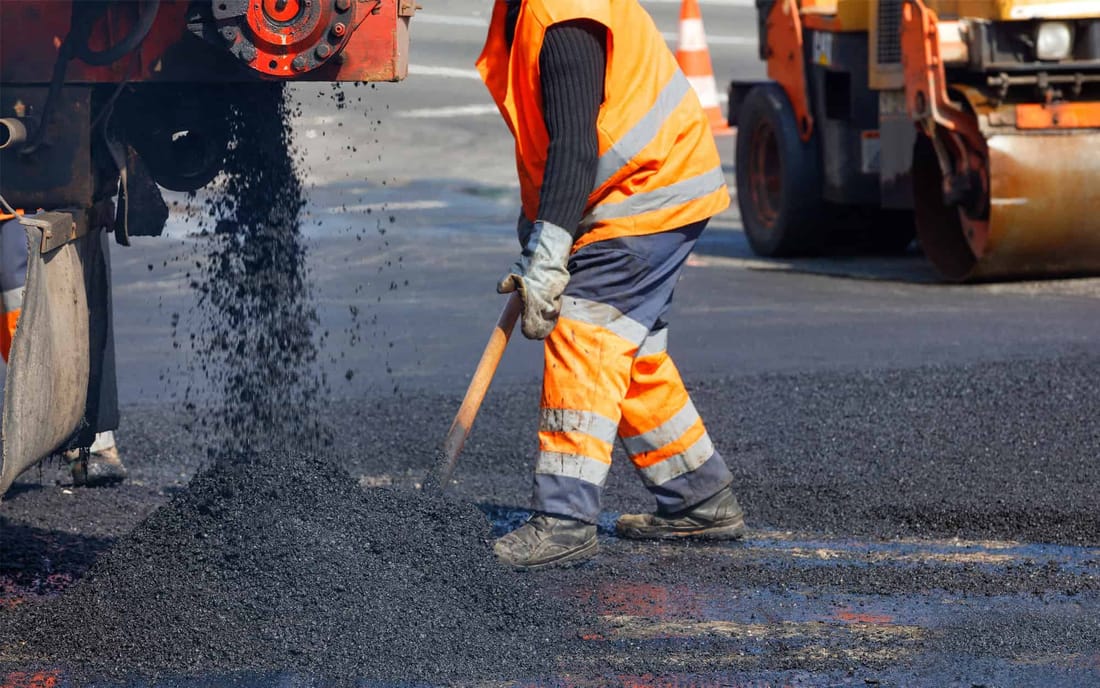
Asphalt is then laid in one or more lifts using a paver that maintains consistent thickness and slope. We target temperatures and rolling patterns that give you dense, well-bonded layers. Special care is taken at joints, especially where new paving ties into existing asphalt or concrete at dock doors, warehouse thresholds, and road connections. We seal or treat these joints so they do not become early failure points.
Before final sign-off, we check slopes with levels, inspect for segregation or surface defects, confirm that drainage flows away from buildings and critical equipment, and address any ponding. If striping is needed for truck lanes or staging areas, we use layouts that reflect how your operation actually moves, not just a generic pattern.
Costs, Common Problems, and How We Prevent Failures
Many industrial property owners in Arlington have seen pavements that rut, crack, or crumble far sooner than expected. Most of these failures trace back to three issues: under-designed thickness, poor drainage, or inadequate compaction. Precision Asphalt Arlington structures each project to avoid those pitfalls.
Cost for industrial asphalt paving is mainly driven by thickness of asphalt and base, amount of excavation or soil stabilization needed, access constraints, and whether work must be done at night or in tight windows to keep operations running. When we prepare a proposal, we break out these elements so you can see where your money is going and where there might be options.
If you are comparing bids, pay attention to details like base thickness, asphalt lift configuration, and subgrade treatment. A low bid with 4 inches of base and 2 inches of asphalt will not perform the same as a design with 10 inches of base and 4 inches of asphalt under the same traffic. We are always willing to explain, line by line, why we recommend a certain design and what the long-term maintenance implications are.
To prevent rutting in truck lanes, we increase asphalt thickness, choose mixes that resist deformation, and avoid leaving un-compacted edges. To reduce cracking, we prepare and stabilize subgrade, plan joints away from high-stress locations, and consider reinforcing fabric in overlays where movement is expected. For fuel and oil exposure common at loading docks and truck stops, we may recommend concrete pads in the worst spill areas tied smoothly into the asphalt, rather than letting petroleum products slowly soften the surface.
You also have options to extend the life of your investment, such as scheduled sealcoating for lighter-duty industrial pavements, crack sealing to keep water out of the structure, and occasional patching in high-impact areas. We can build a maintenance plan that fits your budget and operational schedule.
Planning Your Project in Arlington and Working With Our Team
Industrial paving projects must be coordinated around your operations. Precision Asphalt Arlington works with facility managers, safety coordinators, and general contractors to phase work and minimize disruption.
For active warehouses and plants, we often break projects into zones, setting up temporary traffic control and signage so trucks and employees can still move safely. In some cases, we pave during overnight or weekend windows. We also coordinate with utility locators, security teams, and neighboring tenants so there are no surprises when equipment arrives.
Before starting work, we review truck routes, staging areas for materials, and access to fire lanes and emergency exits. If your site is near major routes like I-20 or Highway 360, we plan deliveries to avoid the heaviest traffic where possible and keep your dock operations as normal as we can.
We believe clear communication is part of a successful heavy-duty paving job. You will know what section is being worked on each day, when trucks or employees need to avoid certain areas, and when the pavement can be opened to light traffic and then to full heavy use. After completion, we walk the site with you, answer questions, and provide guidance on cure times and initial loading so you get the full strength and life out of your new pavement.
If you are planning a new facility, expanding a yard, or replacing a failing industrial surface anywhere in Arlington, Precision Asphalt Arlington can help you move from concept to a finished pavement that fits your loads, schedule, and budget.