Home › Asphalt Pathways, Sidewalks, and Trails
Connect your property with safe, smooth asphalt pathway paving in Arlington, TX. We build sidewalks, walking loops, and multipurpose trails for parks, schools, and campuses. Our team designs grades, widths, and curves for pedestrians, cyclists, and strollers. Provide accessible, low maintenance paths that encourage people to move comfortably through your site.
Precision Asphalt Arlington provides professional asphalt pathway paving throughout Arlington, TX, Texas and the surrounding area. Our licensed, insured crew delivers safe, clean, on-time work with a free estimate before anything begins. Call (817) 646-5980 or request your free quote.
Asphalt Pathways, Sidewalks, and Trails in Arlington, TX
Asphalt pathways, sidewalks, and trails need to stand up to heavy foot traffic, bikes, strollers, and Texas weather. Precision Asphalt Arlington focuses on building surfaces that stay smooth and safe instead of just looking good on day one. We design and install asphalt pathway paving for neighborhoods, HOAs, parks, schools, churches, and commercial properties throughout Arlington and nearby Tarrant County communities.
In this climate, summer heat can soften weak asphalt and cause scuffing, while the occasional freeze can open up poorly compacted joints. That is why we match the asphalt mix and base thickness to how your pathway will actually be used and where it sits on your property. A short residential connector path to your driveway is not built the same way as a shared-use trail around a park lake.
Whether you are solving a mud problem between buildings, upgrading old trip-prone sidewalks, or planning a long walking loop for an HOA, we walk your site with you, talk through how people move through the area, and then give you a clear plan, timeline, and cost before we start.
How We Prepare the Site and Base
Good asphalt pathway paving in Arlington starts with dirt work, not with the asphalt itself. First, Precision Asphalt Arlington locates utilities and checks drainage patterns so we do not trap water along the new path. Standing water is the number one reason pathways fail early, so we look at slopes from buildings, yards, and nearby pavement before we touch a shovel.
Next, we strip grass, roots, and loose soil along the planned path width plus extra on the sides. For light-use residential walkways, we typically excavate 4 to 6 inches. For park trails, school campuses, or routes that will occasionally see maintenance carts or light vehicles, we often go 6 to 8 inches. The goal is a uniform depth along the entire run so the base is consistent.
We then install a compacted aggregate base, usually crushed limestone or flex base that performs well in North Texas clay. It is placed in layers (called lifts) and compacted with plate compactors or small rollers until it meets density targets. On soft spots, we may dig deeper and add geo-grid or additional base material so those sections do not settle later. Edges can be strengthened with a slightly wider base than the asphalt surface to prevent crumbling.
Before paving, we shape the base so the path has a slight crown or cross slope, usually 1.5 to 2 percent, to move water off the surface. At this stage, we also set forms or edge guides where tight alignment is critical, such as alongside property lines, buildings, or existing concrete sidewalks.
Paving Process, Mix Choices, and Surface Options
Once the base is set, we place the asphalt. Precision Asphalt Arlington typically installs 2 to 3 inches of hot mix asphalt for pedestrian pathways. For heavy-use shared trails that will see golf carts, service vehicles, or maintenance trucks, we may recommend a thicker section with a stronger base.
We select the mix based on use and appearance. A finer aggregate mix leaves a smoother finish that is comfortable for walkers, runners, and wheelchairs. A slightly coarser mix may be used where grip in wet conditions is a priority, for example around splash pads or near water features. We can also adjust the mix to handle the high surface temperatures we see in Arlington summers.
Paving is usually done with a small asphalt paver for longer runs, which gives a more uniform thickness and smoothness. In tight or curved areas between trees or structures, we may hand-place and compact the mix. Compaction is done with walk-behind or ride-on rollers, along with plate compactors at edges and around structures, to tie the asphalt tightly to the base and eliminate air pockets that lead to raveling.
Edge treatment is an important detail that many contractors skip. On standalone asphalt pathways, we often compact a small 45 degree bevel along both sides so water sheds and the edges are less likely to crack from incidental traffic. Where a path meets concrete drives or sidewalks, we cut clean joints and set elevations carefully so there are no trip lips.
Design Considerations for Pathways, Sidewalks, and Trails
Pathway layout affects both user safety and long-term maintenance. We start every asphalt pathway paving project in Arlington by looking at how the path will actually function, not just where it can be squeezed in. That includes line of sight around curves, lighting, shade, and how close the path is to vehicle traffic.
Width is a major decision. For simple residential side yard paths, 3 to 4 feet can be enough. For neighborhood walking loops, school routes, or shared bike and pedestrian trails, we often recommend 6 to 8 feet so two people can walk side by side and pass others without stepping off into grass. Where HOA or city standards apply, we design to meet those minimums.
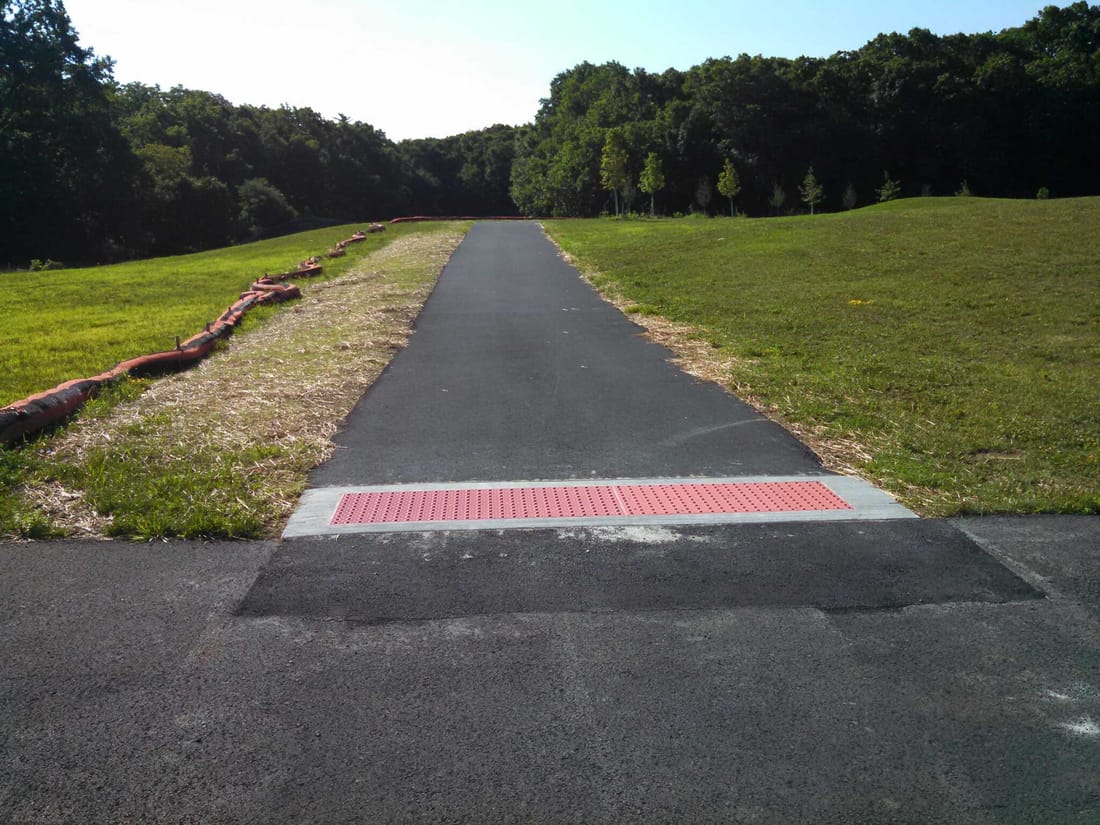
We also plan for access and transitions. That means ADA-compliant connections to parking lots, curb ramps with proper slopes, and stable landings at doors and gates. Around trees, we factor in root zones and may adjust alignment or reinforce the base so roots are less likely to push the asphalt up over time.
Drainage design is built in from day one. We avoid low spots that collect water, plan crossings at existing swales or drainage flows, and, when needed, add small culverts or shallow swales to carry water under or away from the path. In North Texas storms, short intense downpours are common, so a pathway that looks fine on a drawing can still pond water if these details are ignored.
Cost Factors, Common Problems, and Maintenance
The cost of asphalt pathways, sidewalks, and trails in Arlington is driven mainly by three things: length and width, site conditions, and access. Longer and wider paths obviously use more material and labor. Poor soil, tree removal, or the need to build up low areas will add to the base work. Limited access that requires smaller equipment or hand work can also increase cost.
Precision Asphalt Arlington provides itemized estimates so you can see where the money is going. We break out base prep, asphalt thickness, and any extras such as drainage improvements, demolition of old concrete, or tie-ins to existing structures. This helps you make decisions about where to invest for durability and where you might be able to scale back.
Common problems we see on older Arlington pathways include edge breaking, low spots that hold water, and cracking over tree roots. Edge failures are usually from thin base or no edge support. Our fix is to cut back the damaged area, rebuild the base, and tie new asphalt into the old with proper compaction. For low spots, we may mill or level the area and overlay with new asphalt to restore slope.
For maintenance, we generally recommend inspecting your asphalt pathways once a year. Look for standing water after rains, early cracking, or raveling (loose gravel on the surface). Crack sealing and sealcoating, when appropriate, can extend the life of the surface. In high-traffic HOA or park settings, planning for a resurfacing overlay every 10 to 15 years, depending on use, usually costs less than waiting until full reconstruction is needed.
When to Schedule and How to Get Started in Arlington
Temperature and humidity both affect asphalt installation quality. In Arlington, the best times of year for new asphalt pathway paving are typically from late March through early June and from late September through early November. During these windows, surface temperatures are high enough for good compaction, but not so extreme that the mix cools too fast or becomes difficult to work. We do pave in the summer, but we adjust scheduling to early mornings and pay close attention to mix transport times so the asphalt does not sit in trucks too long.
For schools, churches, and HOAs, we help plan work around events, drop-off times, and pool or park usage. This may mean breaking a project into phases so at least one access route stays open. We also coordinate with the City of Arlington when work ties into public sidewalks or rights of way, to make sure any required permits or inspections are handled correctly.
If you are considering a new pathway, sidewalk, or trail, a short site visit goes a long way. Precision Asphalt Arlington will walk the path alignment with you, measure grades, look at drainage, and talk through how different width or route choices affect cost. From there, we provide a written proposal with options, such as base thickness upgrades or alternate alignments where you might be able to save money without sacrificing quality.
When you are ready to move forward, we lock in a schedule, confirm utility locates, and keep you informed as the work progresses so you always know who will be on site and what is happening that day.